



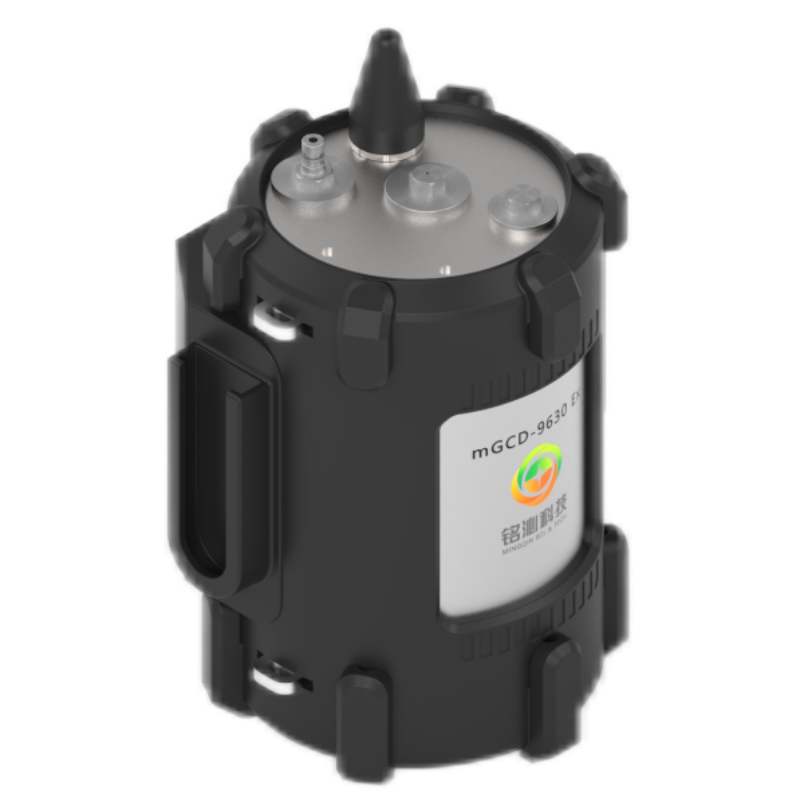
Monitoring factors
Methane, non methane total hydrocarbons, and total hydrocarbons
product overview
This instrument adopts catalytic oxidation+FID detection technology combined with the advantages of a hydrogen oxygen generator, and can measure total hydrocarbons, methane, and non methane total hydrocarbons in ambient air and fixed pollution source exhaust gas. The equipment has passed national explosion-proof certification and can be used in explosion-proof areas such as petrochemicals, gas stations, and oil storage tanks. The whole machine weighs ≤ 4.0Kg and is a portable non methane total hydrocarbon equipment that combines safety, explosion prevention, economy, and stability.
Working principle
Catalytic oxidation+FID: Methane inside the catalytic tube is not catalyzed, and non methane total hydrocarbons are catalytically converted into carbon dioxide and water. Only methane reaches the FID detector for detection. Total hydrocarbons and methane are detected successively by FID in the same cycle, and the content of non methane total hydrocarbons is finally calculated by the difference between the total hydrocarbons and methane content.
Electrolysis of water to produce hydrogen and oxygen: Pure water that meets the requirements is sent into the electrolysis cell. After being powered on, the cathode of the electrolysis cell produces hydrogen gas and the anode produces oxygen gas. The two are separated by water and gas, dehumidified by a dryer, and adjusted to the rated pressure through a pressure regulator valve and a regulating valve before being output to the designated pipeline.
Relevant standards
Determination of Total Hydrocarbons, Methane, and Non Methane Total Hydrocarbons in Waste Gas from Fixed Pollution Sources - Portable Catalytic Oxidation Hydrogen Flame Ionization Detector Method (HJ 1331-2023)
Technical Requirements and Testing Methods for Portable Monitoring Instruments for Total Hydrocarbons, Methane, and Non Methane in Environmental Air and Waste Gas (HJ 1012-2018)
Determination of total hydrocarbons, methane and non methane total hydrocarbons in ambient air by direct injection gas chromatography method (HJ 604-2017)
Determination of Total Hydrocarbons, Methane, and Non Methane Total Hydrocarbons in Waste Gas from Fixed Pollution Sources by Gas Chromatography (HJ 38-2017)
Core advantages
National Explosion proof Certification
The whole machine is explosion-proof, meeting the requirements of explosion-proof fields such as petrochemicals, gas stations, oil storage tanks, etc
Innovation Breakthrough - Built in Hydrogen Oxygen Generator
Addressing the safety hazards of storing gas cylinders for users
The water adding equipment can continuously produce gas for ≥ 20 hours, bidding farewell to gas cylinder accessories from now on
No need for complicated pipeline connections, ready to use upon startup
Multi mode selection
Not only can it test non methane total hydrocarbons, but it can also choose individual total hydrocarbon mode and individual methane mode, making it versatile.
Highly integrated
The catalytic oxidation module, detection module, battery module, gas generation device, and electronic automatic pressure control module are all integrated into one analyzer host system without additional accessories, and the overall weight is ≤ 4Kg. The on-site operation is portable and efficient
Accurate detection
Heat tracing throughout the sample collection process to avoid sample condensation
Adopting a fully automatic electronic flow control system, the accuracy can reach 0.001psi
Real time monitoring of equipment operation status, immediate reminder of fault alarms
Catalytic efficiency ≥ 98%
Low maintenance cost
Built in hydrogen oxygen generator, no need to purchase additional gases (combustion gas, carrier gas)
All consumable components support separate replacement
application area
On site comparison and acceptance of non methane total hydrocarbon automatic monitoring system
Environmental inspection and law enforcement in the factory sector
Monitoring of Non Methane Methane Total Hydrocarbons in Atmospheric Environment
Efficiency evaluation of VOCs pollution control facilities
Self inspection of exhaust emissions from VOCs related enterprises
Petrochemical industry, industry, printing industry, spray painting industry, pharmaceutical industry, etc
Usage scenario
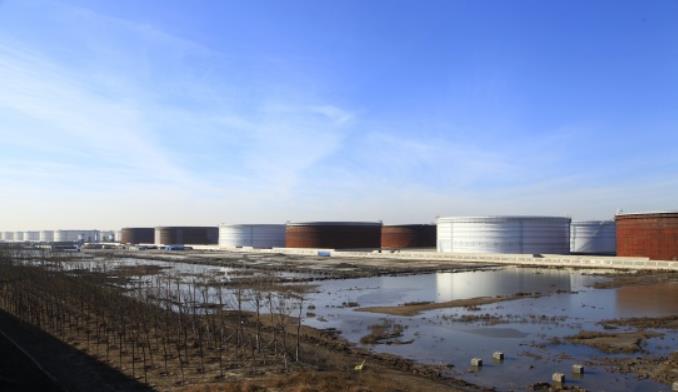
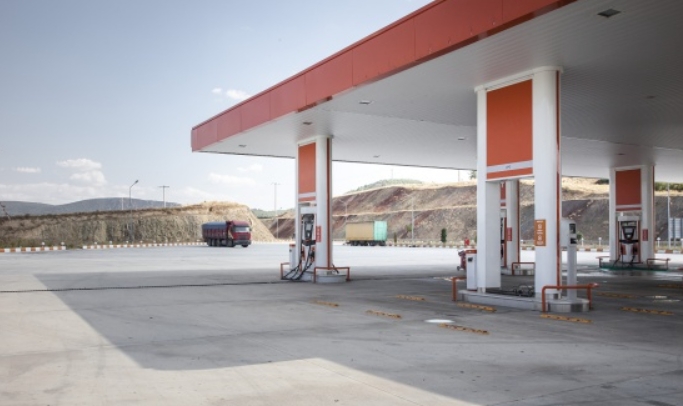
Emergency monitoring instruments, VOCs detectors, VOCs monitoring instruments, heavy metal detectors, oil detectors, water quality detection instruments, portable non methane total hydrocarbon analyzers, portable VOC detectors, portable heavy metal detectors, portable biotoxicity analyzers, UV oil detectors, biotoxicity detectors, portable environmental monitoring equipment, FID detectors, LDAR leak detection, portable gaseous pollutants, volatile organic compound detection, non methane detection, leak detection, VOC detection


