



A new round of COVID-19 epidemic is making a comeback.
In March, a local outbreak mainly known as "Omicron" occurred in many parts of China, covering provinces and cities such as Jilin, Fujian, Hebei, Guangdong, Liaoning, Heilongjiang, Shanghai, Tianjin, Shandong, and Hunan.
The biggest feature of this round of epidemic is its fast spread and strong concealment. Related studies have shown that the transmission speed of Omicron strain BA. 1 is 77% faster than that of the Delta strain, while the transmission speed of Omicron strain BA. 2 is 66% faster than BA. 1.
Under its influence, the density of COVID-19 in domestic sewage also increased significantly. Wastewater treatment professionals should pay attention to protection and minimize the impact of the Omicron virus.
A new round of epidemic is coming fiercely
Compared to before, the biggest feature of this round of epidemic is its fast transmission speed and strong concealment.
According to Xia Haiming, Secretary and Director of the Party Committee of the Nanjing Municipal Health Commission, research has shown that the transmission speed of the Omicron variant BA. 1 is 77% faster than that of the Delta variant, and the transmission speed of BA. 2 is 66% faster than BA. 1.
'The most severe' and 'the most complex' - in official announcements from Jilin Province, Dongguan City and other places, these words are used to describe this round of epidemic.
Kou Qiangqiang, director of the Institute for Infectious Disease Control and Prevention of the Center for Disease Control and Prevention of Shandong Province, said that since 2020, the local area has been dealing with the COVID-19 for more than two years, during which it has also dealt with a certain scale of local cluster epidemic, but after March, "the epidemic situation is completely different".
Mi Feng, spokesman of the National Health Commission, also said that at present, the world is experiencing the fourth wave of the epidemic peak of the COVID-19 epidemic, with more than 10 million new cases reported every week for ten consecutive weeks. Asia is showing a rapid upward trend. Relevant countries and regions around China are constantly breaking the record of new cases in a single day, and the risk of epidemic transmission is increasing.
General Secretary Xi Jinping emphasized at the meeting of the Standing Committee of the Political Bureau of the CPC Central Committee held on March 17 that perseverance is victory. All regions, departments, and aspects should deeply understand the complexity, difficulty, and repetitiveness of current domestic and international epidemic prevention and control, further mobilize, unify thinking, strengthen confidence, persist, and implement various epidemic prevention work in detail.
The density of COVID-19 in domestic sewage increased significantly
With the repetition of a new round of epidemic, the density of COVID-19 detected in sewage treatment sites also began to increase significantly.
According to the report of CCTV Finance and Economics on March 17, the data released by the US Centers for Disease Control and Prevention after testing sewage treatment stations around the country in the past two weeks showed that more than one third of sewage treatment stations detected an increase in the density of COVID-19, of which 37% increased by more than 100%, and 30% by more than 1000%.
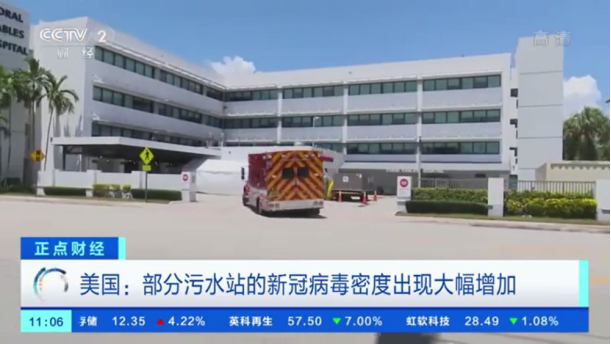
From March 1 to March 10, more than one third of wastewater sample sites monitored by the Centers for Disease Control and Prevention (CDC) showed an upward trend of COVID-19.
In fact, the density of COVID-19 in the sewage station has become an early warning signal for the spread of COVID-19.
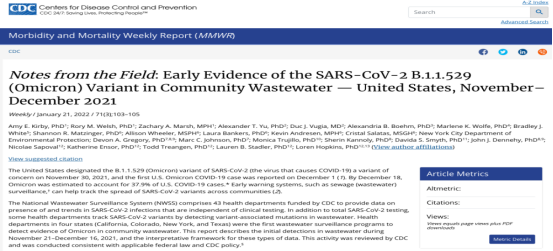
On January 21 this year, the US Centers for Disease Control and Prevention (CDC) once released a report, which pointed out that Omicron, a variant of COVID-19, probably existed in the wastewater of New York City more than a week before the official announcement of the first confirmed case in the United States.
It is reported that the United States reported its first case of Omicron on December 1st last year. But CDC sample analysis shows that someone in New York City had already been infected with Omicron as early as November 21, 2021, 10 days earlier than the first case in the United States.
▼ Screenshot of CDC's report on the discovery of COVID-19 variants in sewage | Source: CDC
Amy Kirby, project leader of the CDC National Wastewater Monitoring System (NWSS), said, "Wastewater monitoring is a very powerful tool. It not only provides warning signals for virus transmission, but also helps track the complete development trend and trajectory of each wave of the epidemic
It is precisely because the content of COVID-19 in domestic sewage shows a "positive correlation" with the number of newly confirmed cases in a single day. Therefore, after the COVID-19 density of sewage treatment stations in many places in the United States has increased significantly recently, some media and experts pointed out that this means that a new epidemic peak in the United States may soon come.
How to protect sewage treatment plants effectively?
The epidemic is making a comeback, and the risk of infection for frontline workers in sewage treatment plants has also significantly increased. How can we do a good job of protection?
Firstly, try to get vaccinated with booster shots as much as possible.
Related studies have shown that two doses of mRNA vaccine or adenovirus vector vaccine have a significant decrease in neutralizing antibodies against Omicron (the neutralizing ability of three doses of inactivated Omicron is yet to be confirmed), and the effectiveness of the original vaccination method is greatly reduced.
Therefore, receiving booster shots has become one of the necessary tasks for sewage treatment workers, especially for operation and maintenance personnel and laboratory personnel with higher infection risks, who should be given priority for vaccination.
Secondly, standardize operational procedures to reduce the risk of infection.
Relatively speaking, the pre-treatment sections of sewage treatment plants, such as sewage lifting pump stations, coarse and fine grilles, cyclone sedimentation tanks, and sludge dewatering rooms, are high-risk areas that are most likely to expose pathogens such as viruses and pose a risk of infection to operators. Therefore, the operating procedures should be more standardized.
Based on the actual situation, the following protective measures can be taken:
1. On site operators should strengthen their self-protection awareness, wear basic protective equipment such as masks and gloves before going on duty, and try to avoid direct contact with sewage, sludge, gravel, and debris;
2. Improve the protection level for the operation of the inlet pump room, pretreatment section, sludge dewatering section, and laboratory water sampling. In addition to masks and gloves, provide goggles and protective clothing;
3. Due to the need for frequent data recording in sewage treatment plants, it is recommended to keep pens disinfected and have one pen per person to prevent cross infection;
4. Strengthen the disinfection of centralized exhaust outlets and require personnel to avoid the airflow at the exhaust outlets as much as possible;
5. After completing the homework, promptly clean and disinfect the protective equipment comprehensively, strengthen personal hygiene, wash hands frequently, and disinfect frequently;
6. Regularly disinfect the slag generated in the pre-treatment section and arrange transportation vehicles to clean and transport the slag in a timely manner.
Thirdly, sewage treatment plants should strengthen disinfection and sterilization.
According to the Diagnosis and Treatment Plan for novel coronavirus Pneumonia issued by the National Health Commission, novel coronavirus is sensitive to ultraviolet light and heat, and fat solvents such as ether, 75% ethanol and chlorine containing disinfectant can effectively extinguish the virus at 56 ℃ for 30min.
Therefore, sewage treatment plants can take the following measures to strengthen sterilization and disinfection, and prevent virus risks:
1. Extend hydraulic retention time
By extending HRT, the removal, inhibition, and inactivation of pathogenic bacteria in each processing unit can be improved. Studies have shown that the treatment units of urban sewage treatment plants not only remove pollutants, but also play a crucial role in preventing, suppressing, or killing pathogenic microorganisms.
2. Increase aeration rate and dosage of chemicals
By increasing the aeration rate to reduce the ammonia nitrogen in the effluent and increasing the dosage of chemicals to reduce suspended solids in the effluent, the treatment efficiency can be improved, the survival ability of bacteria can be reduced, and the sterilization effect can be strengthened.
3. Using a combination of ultraviolet and sodium hypochlorite disinfection methods to maintain disinfection intensity
For example, in order to strictly control the disinfection effect of effluent, a sewage treatment plant in Zhejiang adjusted the process by moving the sodium hypochlorite injection point forward, extending the disinfection contact time, and increasing the sodium hypochlorite injection amount from the usual 5 mg/L to 10 mg/L.
It should be said that although the sewage treatment industry is not in the forefront of the epidemic like medical personnel, as the "second battlefield" to fight against COVID-19, sewage treatment personnel are also faced with a huge risk of infection.
In the previous epidemic, despite numerous difficulties, the sewage treatment industry still overcame obstacles and maintained the normal operation of more than 5000 sewage plants across the country.
Now, a new round of epidemic is making a comeback, and the sewage treatment industry is once again facing huge challenges. It is suggested that environmental protection departments in various regions should not only strengthen supervision, but also provide certain assistance and support, and strengthen pre-treatment in the medical wastewater treatment process to ensure that the discharge meets the standards as much as possible, so as to avoid impact on downstream sewage treatment plants and reduce the pressure on the sewage treatment process.
reference:
1. Up to 24:00 on March 20, the latest situation of novel coronavirus pneumonia, National Health Commission, 2022-03-21
2. Facing Omicron, fighting the epidemic again, New Beijing News, 2022-03-21
3. The density of COVID-19 in some sewage stations in the United States has increased significantly! Expert: May usher in a new wave of epidemic peak, CCTV Finance, 2022-03-17
4. The density of COVID-19 in sewage treatment stations in the United States has increased significantly, and the number of cases in many places may increase again. The All Union Environment Chamber of Commerce 2022-03-16
5. Knowing the virus mutation a week earlier than the hospital? Go to the sewer and sewage treatment plant for sampling, JIEI Innovation Laboratory, January 25, 2022
6. The density of COVID-19 in sewage treatment station has increased significantly! We protect the environment, who will protect us? Enterprise Waste Water Circle, 2022-03-18
Disclaimers
Text and image sources: This article is compiled online for sharing and communication purposes only, and has not been used for any commercial purposes. We maintain a neutral stance on the viewpoints presented in the article, which are for reference and communication purposes only. The copyright of the text content and images belongs to the original author. We respect originality, and if there is any infringement, please contact us promptly for handling!


