



Editor's note: Recently, the Department of Ecology and Environment of Guangdong Province organized relevant units to prepare the "Notice on Carrying out the Reward and Subsidy Work of Air Pollution Prevention and Control Funds" (draft for comments). The Notice proposes to carry out funding rewards and subsidies for air pollution prevention and control during the 14th Five Year Plan period. Among them, a provincial-level fund reward of 15 million yuan will be given to prefecture level and above cities ranked first in the province in terms of the improvement rate of annual Air Quality Index (AQI) compliance rate for two consecutive years plus the average value. The Notice also mentioned that the rewards and subsidies include engineering emission reduction reward and subsidy standards, regulatory emission reduction reward and subsidy standards, and air quality improvement reward and subsidy standards. Among them, the maximum subsidy for each ton of VOCs emission reduction in engineering emission reduction reward and subsidy is 50000 yuan.
There are rewards for improving air quality and meeting air quality standards
According to the Notice, the scope of this award and subsidy is: from January 1, 2021 to December 31, 2025, in accordance with relevant national and provincial requirements, to implement atmospheric environment governance and management capacity building based on NOx and VOCs emission reduction. This mainly includes VOCs pollution control, industrial boiler and kiln pollution control, mobile source pollution control, atmospheric environment supervision and pollutant emission monitoring and supervision capacity building, pollutant emission reduction accounting, and related technical support.
In terms of engineering emission reduction reward and subsidy standards, in order to promote regional coordinated and balanced development, differentiated rewards and subsidies will be implemented for cities at or above the prefecture level in three different levels.
Among them, Guangzhou and Shenzhen are eligible for the first tier, Zhuhai, Foshan, Huizhou, Dongguan, Zhongshan, Jiangmen, Zhaoqing and other cities in the Pearl River Delta are eligible for the second tier, and cities in eastern, northwestern Guangdong are eligible for the third tier.
First tier: Provincial funds will not be allocated for project emission reduction rewards and subsidies temporarily. Second tier: A subsidy of 10000 yuan per ton for NOx emission reduction and 25000 yuan per ton for VOCs emission reduction. Third tier: A subsidy of 20000 yuan per ton for NOx emission reduction and 50000 yuan per ton for VOCs emission reduction.
In terms of air quality improvement reward standards, cities that improve air quality and achieve air quality goals will be rewarded separately.
Improvement bonus:A provincial-level fund reward of 15 million yuan will be given to the city at or above the prefecture level that ranks first in the province in terms of the improvement rate of the annual Air Quality Index (AQI) for two consecutive years, and the average value will be added. A provincial-level fund reward of 10 million yuan will be given to the city at or above the prefecture level that ranks second in the province, and a provincial-level fund reward of 5 million yuan will be given to the city at or above the prefecture level that ranks third in the province. Example of algorithm for adding up the average value for two consecutive years: The AQI compliance rate of a certain city in 2021 has changed by A percentage points compared to 2020, and has changed by B percentage points compared to 2019. The arithmetic mean of A and B is the sum of the average values for two consecutive years. )
Reward for achieving the target: Each city that achieves the annual Air Quality Index (AQI) target set by the province will be rewarded with 1 million yuan, and cities that exceed the target will receive appropriate reward funds again.
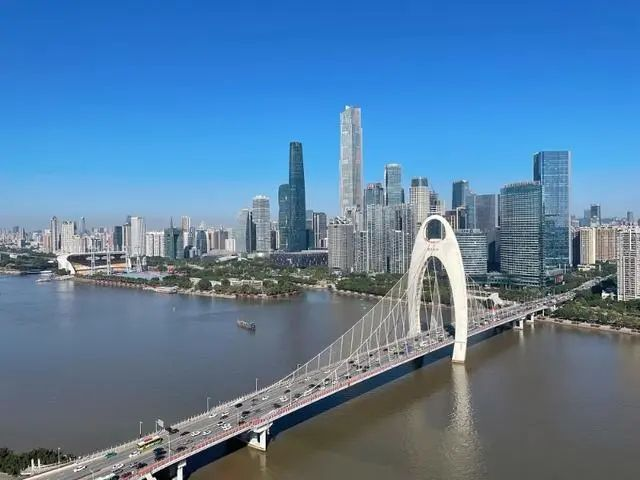
近年来,广州空气质量持续改善(资料图片)
Encourage cities to complete engineering emission reduction measures ahead of schedule
The Notice also requires that the ecological environment departments at or above the local level shall be responsible for the authenticity and compliance of the NOx and VOCs emission reduction tasks and the use of funds, and shall be responsible for the follow-up tracking, supervision and management, performance evaluation, government audit, etc. of the use of funds. The Provincial Department of Ecology and Environment, together with the Department of Finance, conducts annual spot checks on the use of subsidies and grants in cities at or above the prefecture level, urging cities with outstanding problems such as unsatisfactory completion of annual engineering emission reduction tasks and non compliant use of funds to promptly carry out rectification work, and, depending on the situation, to withdraw part of the annual subsidy funds and reduce the subsidy funds for the next year. For cities that exceeded their emission reduction targets in the current year, the next year's reward and subsidy funds will be given priority to make up for them.
The use of reward and subsidy funds should be included in the management of project libraries in various cities, and the cities are responsible for the construction and implementation of project libraries, as well as the use and audit of funds. Cities that have received funding from the central government for air pollution prevention and control will receive appropriate subsidies from provincial-level award funds. The policy of engineering emission reduction rewards and subsidies is implemented to control the total amount of reward and subsidy funds, and is implemented according to the principle of "reducing first, supplementing first, and using up funds" within the total amount of reward and subsidy funds. It encourages all cities to complete engineering emission reduction measures in advance, improve the environmental air quality within their jurisdiction as soon as possible, and effectively safeguard the health of the people.
The full text of the notice is as follows:
In order to further improve the use of funds for air pollution prevention and control, encourage various cities to effectively utilize relevant financial funds, promote the coordinated reduction of nitrogen oxides (NOx) and volatile organic compounds (VOCs), support enterprises to overcome difficulties, stimulate the endogenous driving force of pollution control, effectively reduce ozone pollution, and continuously improve environmental air quality, in accordance with the "Management Measures for Provincial Financial Special Funds in Guangdong Province (Trial)" (Yue Fu [2018] No. 120) and the "Management Rules for Provincial Ecological Environment Special Funds in Guangdong Province" (Yue Huan Han [2019] No. 1135), our department has organized relevant units to prepare the "Notice on Carrying out the Reward and Subsidy Work for Air Pollution Prevention and Control Funds". We are now publicly soliciting opinions. Please provide feedback to our department via email before April 9, 2022.
Contact: Tao Yanbin, Xu Jike, Atmospheric Department, Provincial Department of Ecology and Environment
Phone: 020-87532485
Email: xujike@gdee.gd.gov.cn
Attachment: Notice on Carrying out Fund Reward and Subsidy Work for Air Pollution Prevention and Control (Draft for Comments). doc
Guangdong Provincial Department of Ecology and Environment
March 31, 2022

Notice on Carrying out the Reward and Subsidy Work for Reducing Major Air Pollutants during the 14th Five Year Plan Period
In order to fully implement the overall requirements of reducing pollution, carbon emissions and enhancing efficiency, focusing on the coordinated control of fine particles (PM2.5) and ozone (O3), accelerating the coordinated reduction of nitrogen oxides (NOx) and volatile organic compounds (VOCs), effectively reducing ozone pollution, and continuously improving the environmental air quality of the whole province, in accordance with the "Management Measures for Provincial Financial Special Funds in Guangdong Province (Trial)" (Yue Fu [2018] No. 120) and the "Management Rules for Provincial Ecological Environment Special Funds in Guangdong Province" (Yue Huan Han [2019] No. 1135), the relevant matters of the reward and subsidy work for air pollution prevention and control funds will be announced as follows:
01
1、 Scope of rewards and subsidies
From January 1, 2021 to December 31, 2025, in accordance with relevant national and provincial requirements, we will implement capacity building for atmospheric environment governance and management based on the reduction of NOx and VOCs emissions. This mainly includes VOCs pollution control, industrial boiler and kiln pollution control, mobile source pollution control, atmospheric environment supervision and pollutant emission monitoring and supervision capacity building, pollutant emission reduction accounting, and related technical support.
02
2、 Reward and compensation methods
According to the principle of "disbursement first, settlement later", the reward and subsidy policies for engineering emission reduction, regulatory emission reduction, and air quality improvement are implemented in a stacked manner. The funds for engineering emission reduction awards must be fully allocated to corresponding engineering governance projects with emission reduction in the local area. Regulatory emission reduction awards and air quality improvement awards can be used for the construction of atmospheric environment management capacity and pollution prevention and control projects that meet the scope of awards.
03
3、 Reward and compensation standards
To promote regional coordinated and balanced development, differentiated rewards and subsidies will be implemented for cities at or above the prefecture level in three different levels. Among them, Guangzhou and Shenzhen are eligible for the first tier, Zhuhai, Foshan, Huizhou, Dongguan, Zhongshan, Jiangmen, Zhaoqing and other cities in the Pearl River Delta are eligible for the second tier, and cities in eastern, northwestern Guangdong are eligible for the third tier.
(1) Standards for engineering emission reduction awards and subsidies.
First tier: Provincial funds will not be allocated for project emission reduction rewards and subsidies temporarily.
Second tier: A subsidy of 10000 yuan per ton for NOx emission reduction and 25000 yuan per ton for VOCs emission reduction.
Third tier: A subsidy of 20000 yuan per ton for NOx emission reduction and 50000 yuan per ton for VOCs emission reduction.
(2) Regulatory emission reduction reward and subsidy standards.
According to the total amount of annual engineering emission reduction awards obtained by various cities, regulatory emission reduction awards will be given in a 1:1 ratio in principle. Guangzhou and Shenzhen each provide an annual subsidy of 1 million yuan for emission reduction accounting.
(3) Air quality improvement award and subsidy standards.
Improvement Reward: A provincial-level fund reward of 15 million yuan will be given to the city at or above the prefecture level that ranks first in the province in terms of the improvement rate of the annual Air Quality Index (AQI) compliance rate for two consecutive years plus the average value. A provincial-level fund reward of 10 million yuan will be given to the city at or above the prefecture level that ranks second in the province, and a provincial-level fund reward of 5 million yuan will be given to the city at or above the prefecture level that ranks third in the province. Example of algorithm for adding up the average value for two consecutive years: The AQI compliance rate of a certain city in 2021 has changed by A percentage points compared to 2020, and has changed by B percentage points compared to 2019. The arithmetic mean of A and B is the sum of the average values for two consecutive years. )
Reward for achieving the target: Each city that achieves the annual Air Quality Index (AQI) target set by the province will be rewarded with 1 million yuan, and cities that exceed the target will receive appropriate reward funds again.
04
4、 Funds disbursement
Before early October of each year from 2022 to 2024, the ecological environment departments of cities at or above the local level, together with the finance department, should summarize the NOx and VOCs emission reduction tasks and the use of reward funds in their respective regions for the current year (up to the end of September of the current year. The situation from October to December of the current year should be summarized and submitted to the next year), fill out the annual VOCs and NOx emission reduction and reward amount summary table and settlement list (attachments 3 and 4) (after the optimization and upgrading of the Guangdong Province fixed pollution source supervision system, the official information related to the accounting of NOx and VOCs emission reduction of local enterprises should be truthfully reported to the system), propose the next year's reward fund demand, and submit it to the provincial ecological environment department and finance department for review. The Provincial Department of Ecology and Environment, together with the Provincial Department of Finance, will refer to the national plan for reducing the total amount of major pollutants in our province during the 14th Five Year Plan period. Based on the estimated task of NOx and VOCs emissions reduction in each prefecture level or above city for the next year, the improvement of air quality in the previous year, and in combination with local project reserves, previous financial performance, and the implementation of emission reduction measures, the next year's reward and subsidy funds will be arranged. In the first half of 2026, the Provincial Department of Ecology and Environment, together with the Provincial Department of Finance, will liquidate the reward and subsidy funds during the 14th Five Year Plan period.
05
5、 Management of fund utilization
(1) Coordinate and plan the use of reward and subsidy funds. The ecological environment and finance departments of cities at or above the local level should, based on the improvement needs of local environmental air quality and the implementation of NOx and VOCs emission reduction tasks, coordinate the planning of air pollution control and management capacity building, timely carry out detailed allocation of reward and subsidy funds, construction of municipal project libraries, project implementation and evaluation, information disclosure and other work, strictly implement the scope of fund use, and improve the efficiency of financial fund use. Develop an annual plan for the use of funds for engineering emission reduction, regulatory emission reduction, and air quality improvement in the local city, and promptly report it to the Provincial Department of Ecology and Environment after issuance. Standardize the storage of official data related to NOx and VOCs emission reduction accounting for enterprises for more than 6 years (see attachments 1 and 2 for templates).
(2) Effectively carry out the settlement of reward and subsidy funds. According to the Notice on Guiding the Entry of Air Pollution Control Projects (Yue Huan Ban [2021] No. 92), during the 14th Five Year Plan period, the funding for engineering emission reduction and air quality improvement awards from 2021 to 2022 should be completed in the second half of 2022, and the main source of liquidation funds will be the provincial-level air pollution prevention and control funds issued that year; The award and subsidy funds from 2023 to 2025 should be arranged before the end of the previous year in principle; Unified liquidation will be carried out in 2026. For areas that have not completed their NOx and VOCs emission reduction tasks, the Provincial Department of Ecology and Environment, in conjunction with the Department of Finance, will deduct the award and subsidy funds as appropriate during the 2026 award and subsidy fund settlement.
(3) Strengthen the supervision of the use of reward and subsidy funds. The ecological environment management departments at or above the local level are responsible for the authenticity and compliance of the NOx and VOCs emission reduction tasks and the use of funds, as well as for the follow-up tracking, supervision and management, performance evaluation, government audit, and other aspects of fund use. The Provincial Department of Ecology and Environment, together with the Department of Finance, conducts annual spot checks on the use of subsidies and grants in cities at or above the prefecture level, urging cities with outstanding problems such as unsatisfactory completion of annual engineering emission reduction tasks and non compliant use of funds to promptly carry out rectification work, and, depending on the situation, to withdraw part of the annual subsidy funds and reduce the subsidy funds for the next year. For cities that exceeded their emission reduction targets in the current year, the next year's reward and subsidy funds will be given priority to make up for them.
The use of reward and subsidy funds should be included in the management of project libraries in various cities, and the cities are responsible for the construction and implementation of project libraries, as well as the use and audit of funds. Cities that have received funding from the central government for air pollution prevention and control will receive appropriate subsidies from provincial-level award funds. The policy of engineering emission reduction rewards and subsidies is implemented to control the total amount of reward and subsidy funds, and is implemented according to the principle of "reducing first, supplementing first, and using up funds" within the total amount of reward and subsidy funds. It encourages all cities to complete engineering emission reduction measures in advance, improve the environmental air quality within their jurisdiction as soon as possible, and effectively safeguard the health of the people.
Disclaimers
Text and image sources: This article is compiled online for sharing and communication purposes only, and has not been used for any commercial purposes. We maintain a neutral stance on the viewpoints presented in the article, which are for reference and communication purposes only. The copyright of the text content and images belongs to the original author. We respect originality, and if there is any infringement, please contact us promptly for handling!


