



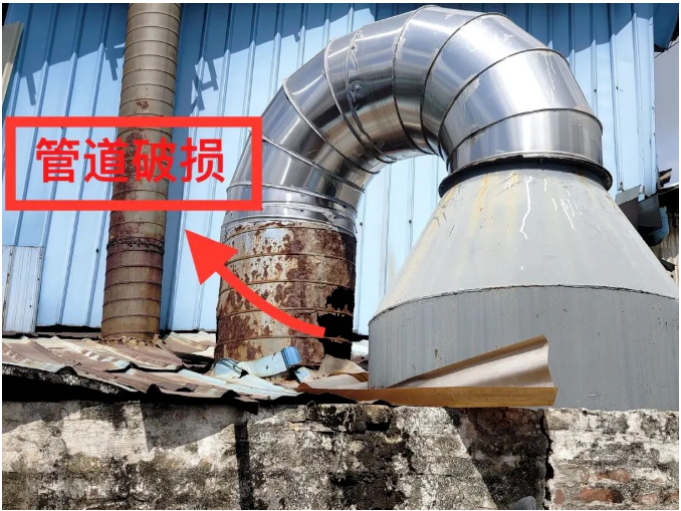
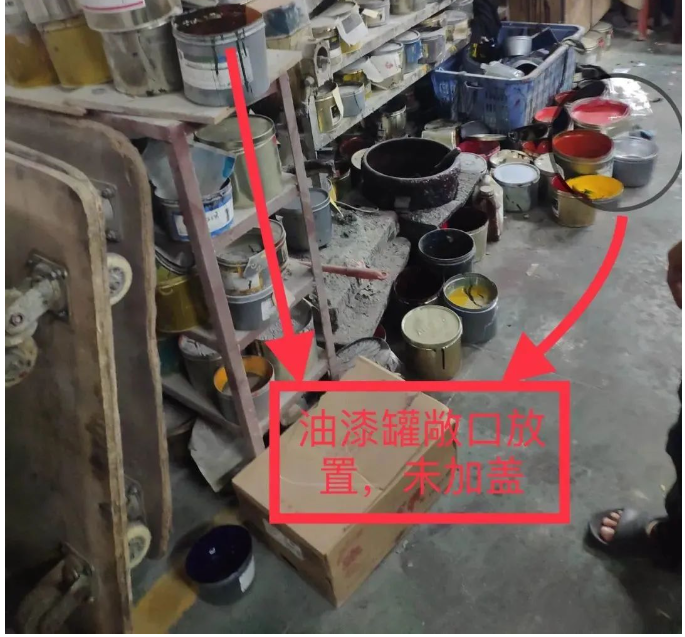
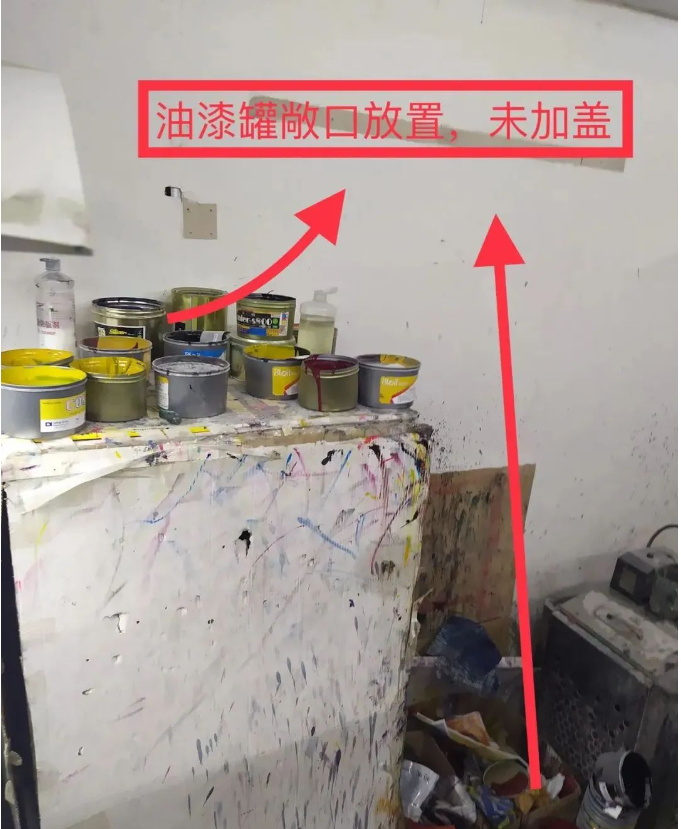
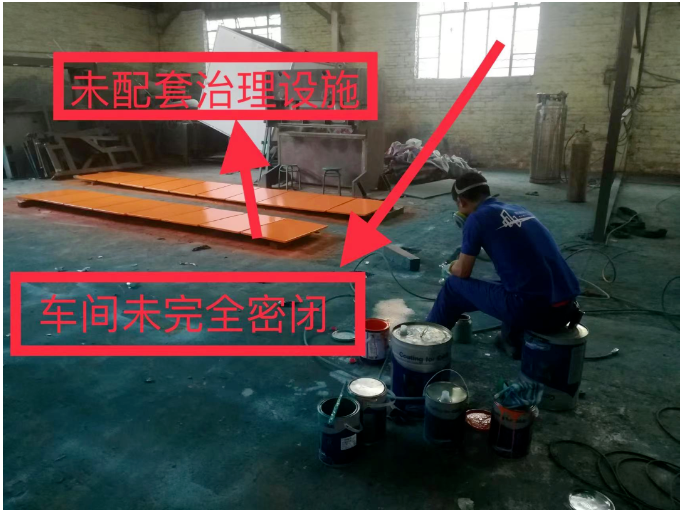
Corresponding legal provisions

1、 Source control
1. Whether to produce products that should be phased out.
2. Whether to use production equipment that should be phased out.
2、 Ledger requirements
3. Have you established a ledger for raw materials, including cash procurement, usage and consumption of raw materials, and inventory balance of raw materials.
4. Whether to keep the ingredient manual and inspection report of raw and auxiliary materials.
5. Whether to establish a production product ledger, including product output, sales records, and inventory records.
6. Whether to save original documents such as raw material delivery notes and purchase invoices.
7. Has the ledger been kept for more than three years.
3、 Sealing requirements
8. Whether the raw materials containing VOCs are sealed during storage.
9. Whether the raw materials containing VOCs are sealed during transportation and handling.
10. Whether the raw materials containing VOCs are sealed during the modulation or pretreatment process, such as the paint mixing room and position.
11. Whether the raw materials containing VOCs are sealed during the feeding process.
Is the intermediate product containing VOCs sealed during storage.
13. Is the intermediate product containing VOCs sealed during transportation.
14. Is the intermediate product containing VOCs sealed during the feeding process.
15. Whether finished products or products containing VOCs are sealed during storage.
16. Whether finished products or products containing VOCs are sealed during transportation and handling.
17. Whether the finished products or products containing VOCs are sealed during the feeding and filling process.
18. Whether finished products or products containing VOCs are sealed during the packaging process.
19. Whether the feeding port, discharging port, filling interface, and packaging facilities involving VOCs are sealed when not in use.
20. Is the hazardous waste containing VOCs immediately sealed after generation, including paint residue, replaced VOCs adsorbent filter cotton, packaging materials containing ink, organic solvents, cleaning agents, sewage treatment waste, etc.
Is the storage period of hazardous waste containing VOCs sealed.
Is the hazardous waste containing VOCs sealed during transportation, transfer, and relocation.
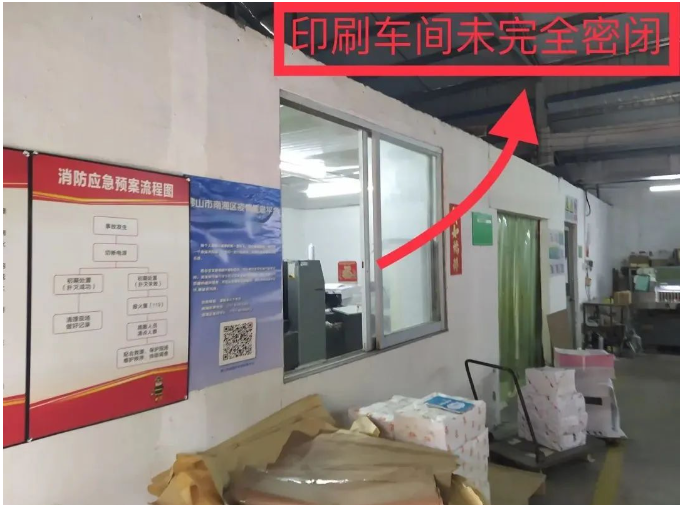
23. Whether all production vehicles or workshop doors and windows of production facilities that generate VOCs are sealed.
24. Whether the doors and windows of all production workshops or facilities that generate VOCs are equipped with normally closed warning signs or operating procedures.
25. Are there exhaust fans or ventilation fans collected in all production workshops that generate VOCs.
26. Are all production workshop doors that generate VOCs equipped with barrier facilities, such as double doors.
27. Are all production workshops that generate VOCs under micro negative pressure.
28. Are there any gas leakage points in all production workshops or facilities that generate VOCs.
Whether the reaction, stirring, and mixing processes of VOCs containing materials are collected in a closed manner.
Is the separation and refining process of VOCs containing materials collected in a closed manner.
31. Whether the emission of VOCs is reduced during the process of equipment start stop, maintenance, and cleaning.
32. Are the treatment structures of the sewage treatment plant covered and sealed.
33. Whether the waste gas from the sewage treatment plant is collected and treated.
34. Is the VOCs gas collection pipeline marked with the direction of the exhaust gas.
35. Have all production sites and sections that may generate VOCs installed exhaust gas collection systems to collect the exhaust gas in place and introduce it into exhaust gas treatment facilities.
4、 Governance facilities
36. Have the opening and closing times of the exhaust gas collection system, treatment facilities, and production equipment been recorded.
37. Whether the on/off time of facilities and equipment is written into the operating procedures and clearly disclosed.
38. Are the on/off times of the exhaust gas collection system, treatment facilities, and production equipment consistent.
39. Whether the instantaneous emission concentration of any pollutant in non methane total hydrocarbons, benzene, toluene, xylene, acetic acid, methyl acetate, ethyl acetate, acetone, and cyclohexanone at any point outside the sealed facility is less than twice the unorganized emission standard value.
The maximum possible points for inspection include: raw material warehouses or storage tanks, hazardous waste warehouses, and at least three maximum possible points for unorganized emissions.
Whether the VOCs treatment facilities are operating normally, and whether the purification efficiency of the treatment facilities is higher than 50%.
41. Is the process flow of VOCs treatment facilities publicly disclosed.
42. Is the overall introduction of VOCs treatment facilities publicly disclosed.
43. Have the main technical parameters of VOCs treatment facilities been publicly disclosed.
44. Have the operating procedures for VOCs treatment facilities been publicly disclosed.
45. Is the maintenance system for VOCs control facilities publicly disclosed.
Is the location of the public announcement at the governance facility site.
How many locations are there for public announcement.
48. The specific location of the public notice venue.
49. Does all public content include the public announcement of environmental reporting and complaint phone numbers.
50. Whether to record the key technical indicators of VOCs treatment facilities, such as recording the combustion temperature for incineration with thermal oxidation.
51. If it is necessary to regularly replace the adsorbent catalyst or absorption solution, is there a detailed purchase ledger and replacement ledger, including the loading amount, replacement cycle, purchase invoice, and the latest update date of transfer and disposal records.
52. Whether the number of exhaust pipes meets the requirements:
(1) For the treatment of VOCs waste gas using combustion methods (including direct combustion, catalytic combustion, and thermal storage combustion, etc.), each combustion facility is allowed to install one VOCs exhaust pipe
(2) If other methods are used to treat VOCs waste gas, only one VOCs exhaust pipe is allowed to be installed in each building of a company.
53. Are there any other VOCs exhaust outlets and vents installed.
54. Before using activated carbon treatment technology to treat exhaust gas into the activated carbon adsorption box, is there a drying process installed, and is the replacement cycle and filling amount of dehumidifier publicized.
55. Is the use of activated carbon to treat paint exhaust gas in the activated carbon adsorption box equipped with particulate matter removal technology.
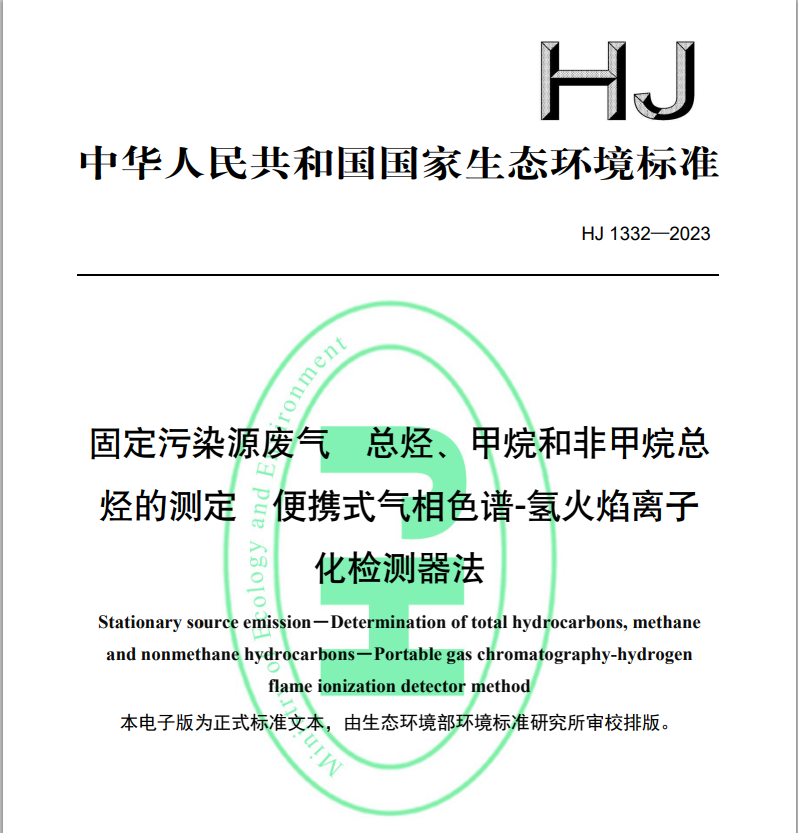
56. Is the exhaust pipe equipped with sampling ports in accordance with the requirements of the "Technical Specification for Fixed Source Monitoring" (HJT397).
57. Is a sampling platform installed at the exhaust sampling port.
Is there a fixed power supply installed near the sampling port of the exhaust pipe.
Is there a fixed and safe personnel passage set up at the sampling port of the exhaust pipe.
60. Is there any other exhaust gas connected to the exhaust pipe after the sampling port.
▌Source: Ecological Environment Learning
▌Editor's note: Frontiers of VOCs
[Disclaimer] This official account is neutral to the original, reproduced and shared content, statements and opinions. The pushed articles are only for readers' reference, and the copyright of the published articles, pictures, etc. belongs to the original author. If some of the reprinted works or images have incorrect author source markings or involve infringement, please kindly remind the original author and contact the editor.
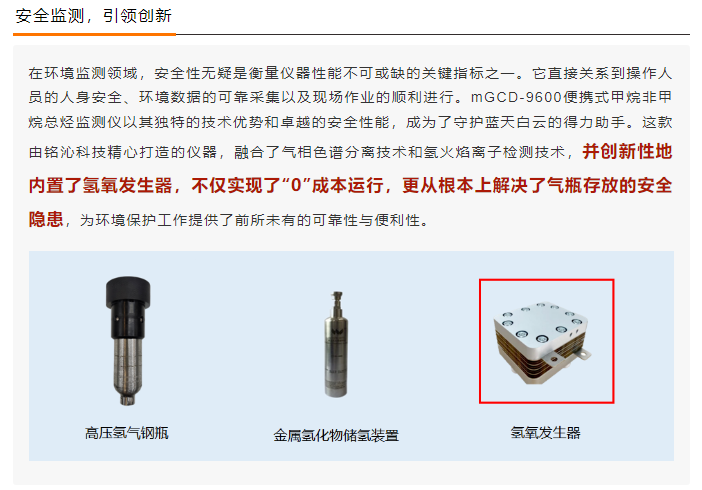
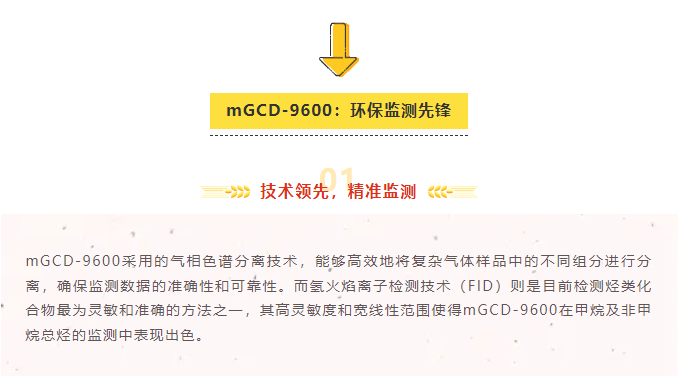
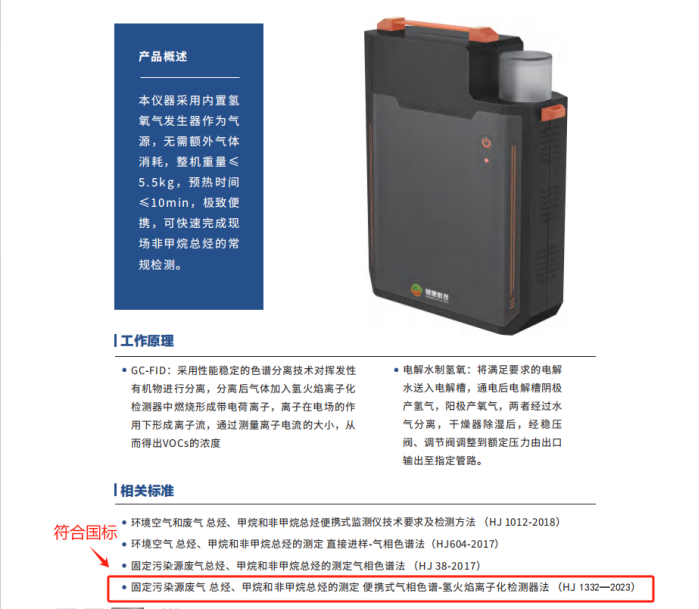
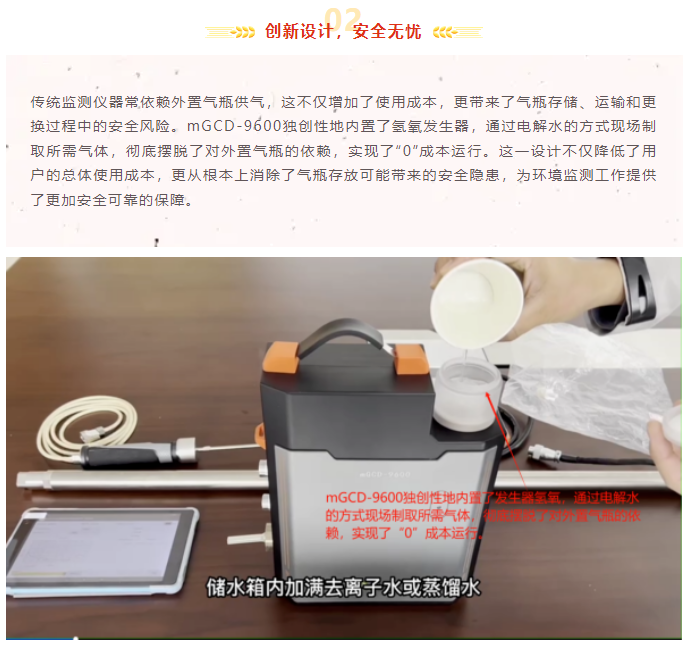
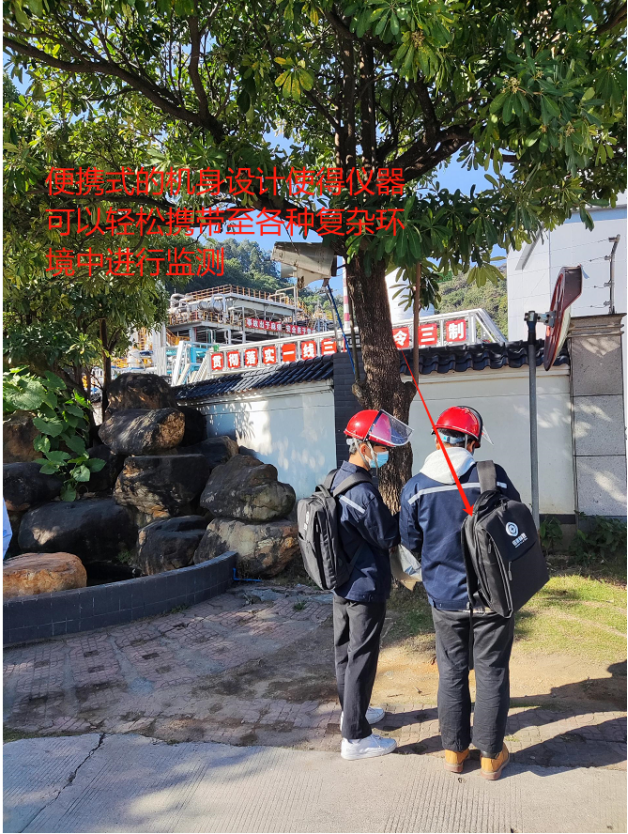
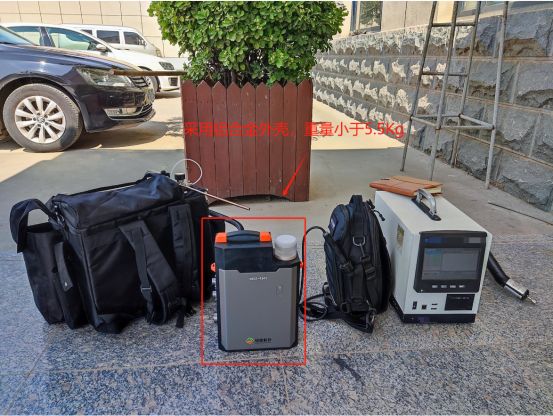
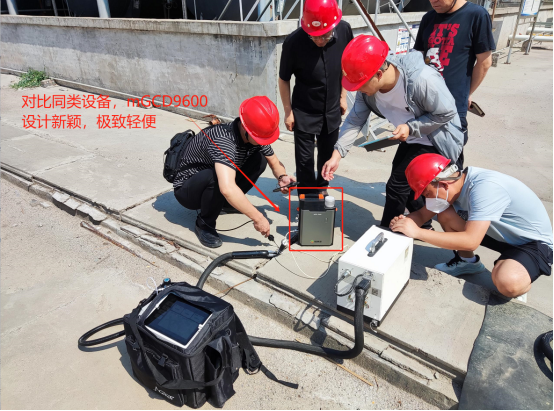
To cope with more complex detection scenarios, Mingqin Technology has launched an upgraded explosion-proof portable methane/non methane total hydrocarbon monitor, mGCD-9600 Ex, which combines the advantages of a hydrogen oxygen generator,And it has passed the explosion-proof certification of authoritative institutions, and can be used in explosion-proof areas such as petrochemicals, gas stations, oil storage tanks, etc。It is a portable non methane total hydrocarbon equipment that combines safety, explosion prevention, economy, and stability.
If you want to learn more, please call 18924066825
Professional personnel will provide you with detailed answers and explanations!!


