



The Enforcement Bureau of the Ministry of Ecology and Environment answers questions from reporters regarding the issuance of the "Guiding Opinions on Strengthening the Enforcement and Supervision of Pollutant Discharge Permits"
2022-04-11
Recently, after being reviewed and approved by the Central Committee for Deepening Reform, the Ministry of Ecology and Environment issued the "Guiding Opinions on Strengthening the Law Enforcement and Supervision of Pollutant Discharge Permits" (hereinafter referred to as the "Guiding Opinions"), proposing to take the fixed pollution source discharge permit system as the core, innovate law enforcement concepts, increase law enforcement efforts, optimize law enforcement methods, improve law enforcement efficiency, and further build a new pattern of ecological environment law enforcement and supervision that includes enterprises holding permits to discharge pollutants, government supervision in accordance with the law, and social supervision. Officials from the Ecological Environment Law Enforcement Bureau of the Ministry of Ecology and Environment answered questions from reporters.
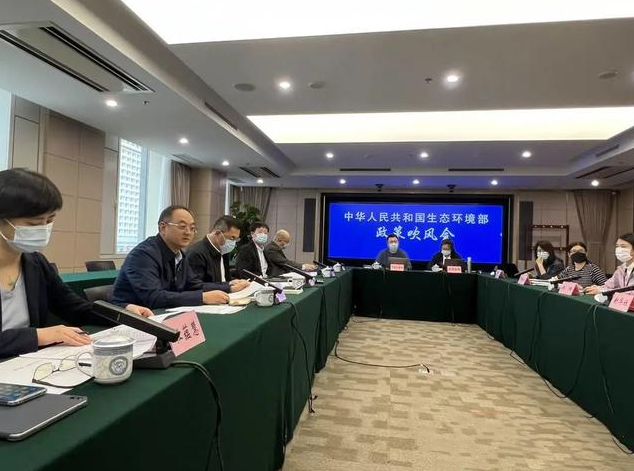
Q: What is the background of the issuance of the Guiding Opinions?
A:
机翻 · 通用领域
The pollution discharge permit system is the core system of the fixed pollution source supervision system, and it is a powerful tool for deepening the battle against pollution prevention and continuously improving the quality of the ecological environment. The Party Central Committee and the State Council attach great importance to this. General Secretary Xi Jinping has repeatedly pointed out the need to fully implement the pollutant discharge permit system and establish a sound risk control mechanism; Continue to fight the battle against pollution prevention and control, strengthen the comprehensive management of air, water, and soil pollution, and continuously improve the urban and rural environment.
During the 13th Five Year Plan period, the national ecological environment system actively promoted the reform of the pollutant discharge permit system, striving to build a new pattern of ecological environment law enforcement and supervision where enterprises discharge pollutants with certificates, the government supervises them in accordance with the law, and society jointly supervises them. The environmental protection law and supporting measures were strictly implemented, and efforts were continuously made to crack down on illegal activities such as unlicensed discharge. As of the end of 2021, 3.0424 million fixed pollution sources have been included in the scope of pollutant discharge permit management nationwide, basically achieving "full coverage" of fixed pollution source pollutant discharge permits. More than 3500 administrative penalty cases violating the "Regulations on Pollutant Discharge Permit Management" have been investigated and punished, with fines of over 300 million yuan.
In order to thoroughly implement the decisions and deployments of the Party Central Committee and the State Council, the Ministry of Ecology and Environment, together with relevant departments, has studied and drafted the "Guiding Opinions". This is an inevitable requirement for implementing the decisions and deployments of the Party Central Committee and the State Council and deepening the battle against pollution prevention and control; It is an inherent requirement to comprehensively promote the reform of the pollutant discharge permit system and build a fixed pollution source supervision system with the pollutant discharge permit system as the core; At the same time, it is also a powerful measure to implement the "Regulations on the Administration of Pollutant Discharge Permits", which will provide direction and path for the enforcement and supervision of pollutant discharge permits in various regions, and promote the construction of a new pattern of ecological environment law enforcement and supervision in which enterprises discharge pollutants with certificates, the government supervises in accordance with the law, and society jointly supervises.
Q: What are the ideas and main contents of the "Guiding Opinions"?
A:The Guiding Opinions adhere to the organic unity of goal orientation, problem orientation, and effect orientation.
One is to adhere to goal orientation. The Guiding Opinions propose that by the end of 2023, key industries will implement a list based enforcement inspection of pollutant discharge permits, and the daily management of pollutant discharge permits, environmental monitoring, and law enforcement supervision will be effectively linked. A fixed pollution source enforcement and supervision system centered on the pollutant discharge permit system will be basically formed. By the end of 2025, the law enforcement inspection based on the pollutant discharge permit list will be fully covered, and the level of systematic, scientific, legal, refined, and information-based supervision of pollutant discharge permit law enforcement will be significantly improved. A fixed pollution source law enforcement and supervision system centered on the pollutant discharge permit system will be fully established.
The second is to adhere to a problem oriented approach. To address the problems and difficulties in the current enforcement and supervision of pollutant discharge permits, detailed measures such as fully implementing relevant responsible parties, strict law enforcement and supervision, and innovative law enforcement concepts will be taken to solve or provide direction.
The third is to adhere to the effect oriented approach. By optimizing the enforcement and supervision of pollutant discharge permits, strengthening the support and guarantee measures for pollutant discharge permit enforcement and supervision, comprehensively improving law enforcement efficiency, and accelerating the construction of a fixed pollution source enforcement and supervision system with the pollutant discharge permit system as the core.
The main content of the "Guiding Opinions" includes 5 parts and 22 articles. The first part is the overall requirements. Clarify the guiding ideology and work objectives. The second part is to fully implement responsibilities. This includes consolidating the territorial responsibilities of local governments, strengthening the regulatory responsibilities of ecological environment departments, and consolidating the main responsibilities of polluting units. The third part is strict law enforcement and supervision. This includes issuing pollutant discharge permits in accordance with the law, strengthening tracking and supervision, conducting list based law enforcement inspections, enhancing law enforcement monitoring, improving the linkage mechanism between law enforcement and supervision, severely punishing illegal activities, and strengthening the connection between administrative law enforcement and criminal justice. The fourth part is to optimize law enforcement methods. This includes improving the "double random, one public" supervision, implementing a positive list of law enforcement, promoting off-site supervision, standardizing the exercise of administrative discretion, implementing rewards for reporting, and strengthening guidance on typical cases. The fifth part is to strengthen support and guarantee. This includes improving standards and technical specifications, strengthening technical and platform support, accelerating team and equipment construction, strengthening environmental credit supervision, encouraging public participation, and enhancing legal publicity.
Q: What key issues and difficulties will the Guiding Opinions focus on solving?
A:In order to do a good job in drafting documents, the Ministry of Ecology and Environment conducted in-depth research on the enforcement and supervision of local pollutant discharge permits, and found that the problems and difficulties in various regions mainly focus on four aspects:
One is about implementing the responsibility of local governments for ecological environment protection. Some local governments need to enhance their understanding of implementing the pollutant discharge permit system, and their responsibilities need to be further strengthened. Some polluting units had already discharged pollutants before the implementation of the "Regulations on the Management of Pollutant Discharge Permits", but due to various historical legacy issues, they were unable to obtain pollutant discharge permits, and many were difficult to shut down immediately due to concerns related to people's livelihoods. To this end, the Guiding Opinions require local governments to take full responsibility for organizing and implementing the pollution discharge permit system, clarify departmental responsibilities, strengthen supervision and handling, coordinate the resolution of historical legacy issues, and further strengthen local government responsibilities.
The second is about the management of issuing pollutant discharge permits. Multiple regions have reported that the issuance of pollutant discharge permits is an important prerequisite for the enforcement and supervision of pollutant discharge permits, and it is necessary to ensure the accuracy of pollutant discharge permit issuance; At the same time, we hope to clarify the issuance procedures and their contents, fully consider the environmental management level of small and medium-sized enterprises, simplify the requirements for environmental management ledger records, self-monitoring, and pollutant discharge permit execution reports, strengthen assistance guidance and legal publicity. To this end, the Guiding Opinions propose to further enhance the scientific, standardized, and operable issuance of pollutant discharge permits, continuously improve the quality of issuance, and carry out quality inspections of pollutant discharge permit issuance; At the same time, it is required that polluting units must discharge pollutants with certificates in accordance with the law, and strengthen legal publicity during on-site inspections.
The third aspect is the linkage mechanism for the enforcement and supervision of pollutant discharge permits. The enforcement and supervision of pollutant discharge permits involve multiple links and departments, and are closely linked to other ecological environment management systems. It is impossible to achieve comprehensive supervision solely by the pollutant discharge permit management department or law enforcement department. It is urgent for the daily management, monitoring, and law enforcement departments of pollutant discharge permits to further streamline their responsibilities and form a regulatory synergy. To this end, the "Guiding Opinions" propose to improve the linkage mechanism of law enforcement and supervision, connect with ecological environment monitoring, environmental impact assessment, and ecological environment damage compensation work, carry out list based law enforcement inspections, optimize the enforcement methods of pollutant discharge permits, and crack down on illegal activities severely.
The fourth aspect is about the enforcement, supervision, and guarantee of pollutant discharge permits. The enforcement and supervision of pollutant discharge permits are difficult and heavy tasks, which have put forward higher requirements for ecological and environmental departments at all levels, especially for grassroots ecological and environmental departments with insufficient personnel and equipment. Some places actively use information technology and other technological means to carry out off-site law enforcement through the establishment of a unified regulatory and law enforcement platform, achieving good results and worthy of promotion and reference. To this end, the Guiding Opinions propose measures to strengthen the enforcement and supervision of pollutant discharge permits from the aspects of improving standards and technical specifications, strengthening technical and platform support, and accelerating the construction of teams and equipment.
Q: What changes will be brought to the enforcement and supervision of pollutant discharge permits after the implementation of the Guiding Opinions?
A:The issuance of the Guiding Opinions will strengthen the use of pollutant discharge permits as the main basis for ecological environment law enforcement and supervision. On the one hand, we will strengthen the dynamic tracking and supervision of pollutant discharge permits, increase the guidance of spot checks, and focus on checking whether all permits should be issued and registered, whether the management level has been lowered in violation of regulations, and whether the actual pollutant discharge situation is consistent with the items stated in the pollutant discharge permit. On the other hand, efforts will be intensified to investigate and punish illegal and irregular behaviors such as unlicensed discharge and non compliant discharge. Malicious illegal behaviors such as illegal discharge and unauthorized release, falsification of self-monitoring data, and intentional abnormal operation of pollution prevention and control facilities will be severely punished in accordance with the law.
The Guiding Opinions on Law Enforcement and Supervision propose a series of innovative and comprehensive measures. One is to innovatively propose a "checklist based law enforcement inspection", which will focus on the items specified in the pollutant discharge permit and implement a checklist based law enforcement inspection; Secondly, we will improve the "double random, one public" supervision, incorporate the registration information of pollutant discharge permits into the law enforcement and supervision database, and adopt a combination of on-site inspection and remote verification to conduct random checks on pollutant discharge permits and their subsequent implementation; The third is to implement a positive law enforcement checklist, promote differentiated law enforcement supervision of pollutant discharge permits, and reduce the number of on-site inspections of compliant pollutant discharge units; Fourthly, non site supervision will be implemented, remote verification will be carried out based on the national pollution discharge permit management information platform, automatic monitoring and management of pollution sources will be strengthened, video surveillance and water (electricity) monitoring of pollution prevention and control facilities will be promoted, and remote identification, warning and supervision of abnormal pollutant emissions will be carried out; The fifth is to establish a mechanism for collecting, analyzing, and publishing typical cases of pollutant discharge permits, and strengthen the guidance and warning education role of typical cases.
Q: How will the Guiding Opinions promote the integration of relevant systems for pollutant discharge permits?
A:Comprehensively promote the reform of the pollution discharge permit system, achieve the "one certificate" full process management of fixed pollution sources from environmental access, pollution control to law enforcement supervision, and the connection and integration of relevant systems are important links. The Guiding Opinions put forward specific requirements in promoting the integration of pollution discharge permit related systems:
Firstly, in terms of the enforcement and supervision of pollutant discharge permits, it is required to strengthen the daily management of pollutant discharge permits, environmental monitoring, and the linkage between law enforcement and supervision, enhance information sharing, clue transfer, and feedback notification, and establish a linkage mechanism for the enforcement and supervision of pollutant discharge permits to discover problems, supervise rectification, and cancel problems. At the same time, it is required to establish a sound working mechanism for law enforcement and monitoring agencies to coordinate and respond quickly, so that monitoring agencies can carry out law enforcement monitoring according to the needs of pollutant discharge permit law enforcement and supervision.
Secondly, it is necessary to strengthen the connection between the enforcement and supervision of pollutant discharge permits and environmental impact assessments. It is required to include the types, concentrations, quantities, methods, and special regulatory requirements of pollutant emissions in the environmental impact assessment documents and approvals into the pollutant discharge permit, and strictly enforce and supervise according to the permit.
Q: How to effectively organize and implement the Guiding Opinions?
A:The implementation of the Guiding Opinions involves the responsibilities of local governments and relevant departments. The Ministry of Ecology and Environment will work with relevant departments to ensure the implementation of the Guiding Opinions, strengthen local government territorial responsibilities, enhance policy coordination and work linkage, and promote the comprehensive establishment of a fixed pollution source law enforcement and supervision system with the pollutant discharge permit system as the core.
Next, the Ministry of Ecology and Environment will continue to conduct quality spot checks on pollutant discharge permits, implement the "Double Hundred" task, and promote the improvement and efficiency of pollutant discharge permits. Organize inspections on the enforcement of pollutant discharge permits, and increase the crackdown on illegal and irregular behaviors such as unlicensed discharge, non compliant discharge, and falsification of self-monitoring data. Establish a mechanism for collecting, analyzing, interpreting, and publishing typical cases of pollutant discharge permits, and timely expose typical cases of illegal pollutant discharge permits. Guide various regions to improve the daily management of pollutant discharge permits, environmental monitoring, and law enforcement supervision linkage mechanism. Carry out pilot law enforcement inspections based on a list of key industries and promote evidence-based supervision. Strengthen the informatization construction of law enforcement and supervision of pollutant discharge permits, and enhance the management and monitoring capabilities of fixed pollution sources. The Ministry of Ecology and Environment will continue to dispatch the highlights, achievements, and typical cases of strengthening the enforcement and supervision of pollutant discharge permits in various regions, and regularly organize publicity and reporting to promote experience exchange and urge all regions to fully implement the requirements of the Guiding Opinions.
Guiding Opinions on Strengthening the Enforcement and Supervision of Pollutant Discharge Permits "Release Link


